
Market News
Morgan Stanley Raises Yuan Forecast After Currency's Nearly 6% Annual Rally - REUTERS
Key Points
- Debt service to consume nearly half of Nigeria’s projected 2026 revenue
- Tinubu urges global finance reform, citing high borrowing costs and limited access to long-term finance
- Nigeria’s reforms stabilised economy but gains eroded by global system treating Africa as high-risk
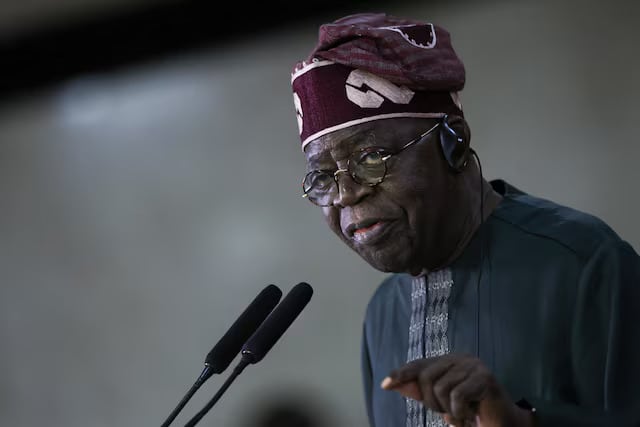
May 13 (Reuters) – Nigeria will spend about $11.6 billion servicing its debt in 2026, nearly half of its projected government revenue, President Bola Tinubu said, as he called for an overhaul of a global financial system he said penalises African borrowers.
Debt-servicing costs are crowding out spending on infrastructure, healthcare and education, he said, despite a government tax overhaul aimed at boosting revenues in Africa’s most populous country. Nigeria spent $5.15 billion servicing its debt in 2025, data from the Debt Management Office showed.
In a speech at the Africa Forward Summit in Nairobi on Tuesday, Tinubu said high borrowing costs and limited access to long-term finance were diverting resources away from industry, skills and infrastructure, in what he called a structural disadvantage for African economies. The summit, co-hosted by Kenya and France, drew leaders from more than 30 countries.
“Every single dollar that leaves our treasury to pay punitive interest rates is a dollar that did not go into our steel sector, our textile mills, our agro-processing plants, or our digital industries,” he said, adding it also meant fewer trained engineers and less affordable power for factories.
Now in his third year in office and aiming for re-election in January 2027, Tinubu has rolled out Nigeria’s biggest reforms in decades, scrapping costly fuel and energy subsidies, devaluing the currency and overhauling the tax system in a bid to stabilise an economy hit by inflation, foreign exchange shortages and external shocks.
He said the “painful, homegrown” reforms had stabilised macroeconomic indicators and lifted investor sentiment.
But he added that the gains were being eroded by a global financial system that treats African sovereigns as persistently high-risk borrowers, driving up interest costs.
Analysts led by the Nigerian Economic Summit Group said this week that debt servicing remains a key vulnerability for the country.
Tinubu called for reforms including cheaper financing and deeper economic integration that prioritises Africa’s growth and prosperity.
He also urged curbs on illicit financial flows and greater support for industrialisation, saying Africa still accounts for less than 2% of global manufacturing.
“Nigeria is not asking for charity,” he said. “We’re demanding a financial system that intentionally enables Africa to industrialize, to process its own minerals, refine its own crude oil, manufacture its own pharmaceuticals, and compete fairly in global markets.”
($1 = 1,369.4000 naira)